
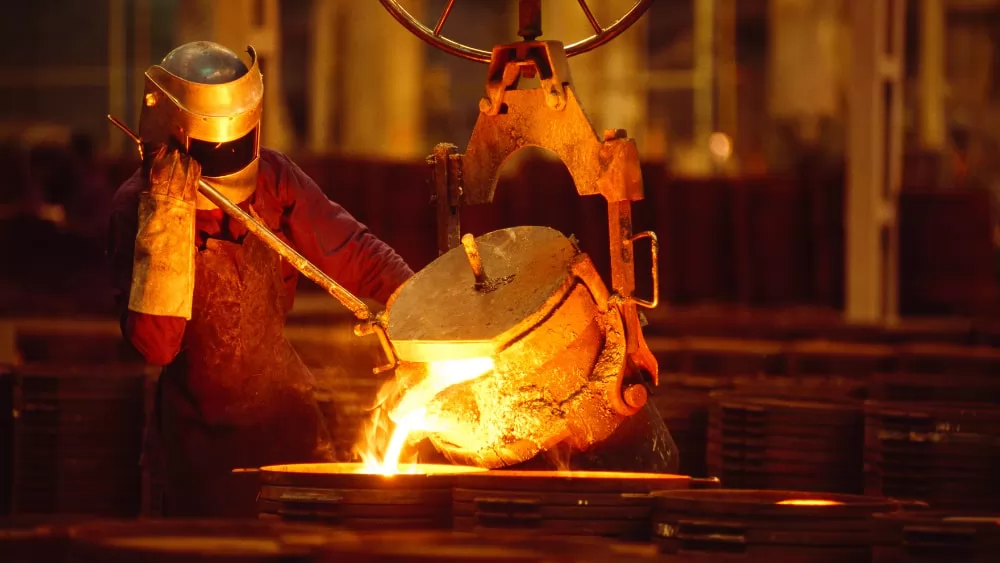
Lost Foam Casting (LFC)is a near-net-shape manufacturing process that uses expandable polystyrene (EPS) patterns coated with refractory material to form disposable molds. Once molten metal is poured into the mold, the foam evaporates (“is lost”), leaving behind a precise metal part.
Its advantages — design flexibility, reduced machining, complex geometry capability, and cost efficiency for certain volumes — make it especially attractive to several industries.
Here are the top industriesthat benefit most:
1. Automotive & Truck Parts
The automotive sector relies heavily on lost foam casting for engine blocks, transmission housings, brackets, pump bodies, and lightweight aluminum components. Buyers choose this process because it reduces machining needs and ensures consistent accuracy for medium-to-large batch runs.
2. Agricultural Machinery
Complex iron parts such as gearbox housings, diff cases, brake components, and structural parts are often produced with lost foam casting. It supports high durability while keeping tooling and part costs lower than conventional sand casting.
3. Construction & Heavy Equipment
Excavators, loaders, and mining machines require castings like bearing housings, support arms, counterweight parts, and hydraulic components. Lost foam helps buyers get high-strength, precise parts suitable for harsh working environments.
4. Pumps, Valves & Fluid Machinery
This industry benefits from the process’s ability to form internal passages, curved channels, and complex shapes without expensive machining. It’s ideal for pump housings, valve bodies, impellers, and compressor parts.
5. Power Generation (Gas, Wind, Nuclear)
Lost foam casting supports components that must handle high loads and thermal stability, such as turbine parts, motor housings, and structural supports. Buyers gain better reliability and reduced defect rates.
6. Rail & Transportation
Railway components like brake parts, coupler parts, and structural iron pieces use lost foam when accuracy and durability are required without driving up cost.
7. General Industrial Machinery
Factories and OEMs use lost foam casting for gear housings, motor parts, machine bases, robotic components, and customized fittings. The process is flexible enough for custom shapes and medium-volume production.
Industries/Applications Where LFC is NOT Typically Preferred:
- High-Volume, Simple Parts: For simple shapes (e.g., manhole covers, simple brackets), green sand casting or die casting is far more economical.
- Very Large Series Production: Pattern costs and cycle times can be higher than die casting for volumes in the hundreds of thousands.
- Parts Requiring Superior Metallurgical Properties: The process can sometimes lead to porosity issues. For critical, high-integrity components (e.g., titanium aerospace turbine blades), investment casting or forging are preferred.
- Ferrous Alloys with High Melting Points: While possible, casting steel is more challenging due to the need to control carbon pick-up from the decomposing foam.
In summary, Lost Foam Casting finds its "sweet spot" in industries manufacturing low-to-medium volume, geometrically complex metal parts—particularly where complexity is internal, weight is a concern, and consolidating an assembly into one piece offers significant cost or performance benefits. The automotive sector remains its primary driver and innovator.
Conclusion:
The automotive, agricultural, heavy machinery, fluid handling, rail, defense/aerospace (niche), and energy sectorsbenefit most from Lost Foam Casting today. Its unique ability to produce strong, complex, near-net-shape parts economically makes it a strategic choice where design intricacy and material performance are priorities.
If you’re looking for reliable metal casting services or need support from experienced engineers, feel free to reach out to us. We are a professional casting manufacturer offering Lost Wax Casting, Lost Foam Casting, Shell Molding, and Sand Casting solutions. Contact us today to discuss your project.
Related Content Recommendations
- Advantages and Disadvantages of Lost Foam Casting
- Why Choose Lost Foam Casting for Large, Complex Parts?
- Investment casting vs. Lost Foam Casting: How to Choose?
- Lost Foam Casting Vs. Sand Casting: How to Choose?
- 5 Advantages of Lost Foam Casting in Modern Manufacturing
- What Is Lost Foam Casting: Process, Materials, And Applications


