
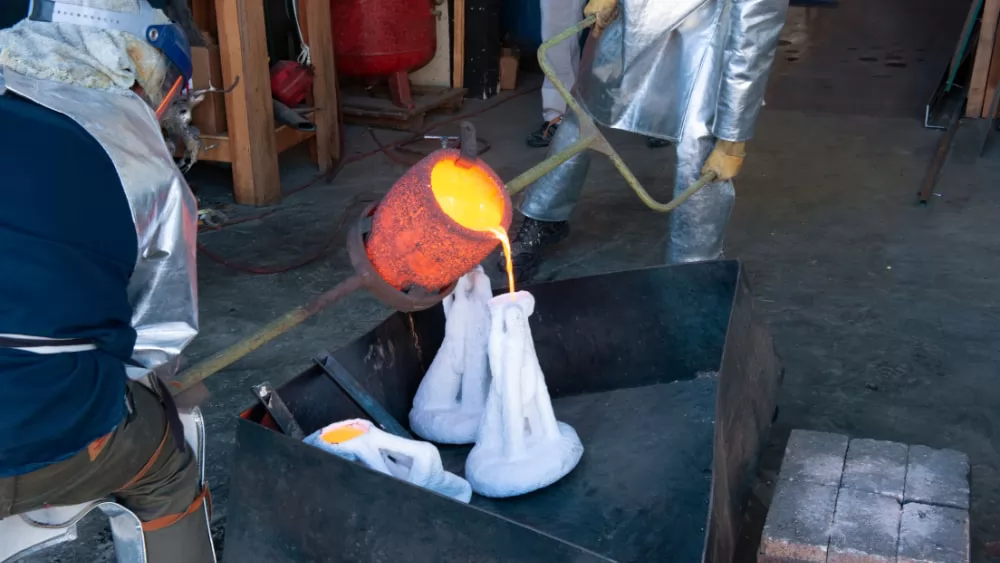
Lost Wax Casting, also known as Investment Casting or Precision Casting, is a centuries-old yet highly sophisticated metal forming process used to create complex, detailed, and dimensionally accurate metal parts. It is widely employed across industries such as aerospace, automotive, medical, jewelry, and industrial manufacturing.
A critical factor that determines the success of a lost wax casting project—especially in terms of accuracy, surface finish, and material integrity—is the careful selection and use of the right materials. From the initial wax model to the final ceramic shell that shapes the molten metal, each stage relies on specific materials with unique properties.
In this guide, we’ll explore the primary materials used in the lost wax casting process, including wax materials, refractory ceramics (investment materials), binders, and auxiliary components. Whether you're an engineer, procurement specialist, or simply curious about how precision castings are made, this article will give you a comprehensive understanding of the materials that make it all possible.
Overview of the Lost Wax Casting Process (Brief)
To understand the role of each material, it helps to briefly review the typical steps in the lost wax casting process:
- Wax Pattern Creation– A precise wax model (or pattern) of the final part is created, often using injection molding, 3D printing, or hand-carving.
- Assembly (Treeing)– Multiple wax patterns are attached to a central wax sprue to form a tree-like structure.
- Investment (Molding)– The wax assembly is coated in a ceramic slurry and then covered with fine refractory powder (like silica or zircon) to build a thick, durable shell.
- Dewaxing (Burnout)– The wax is melted and drained out of the ceramic shell through a furnace process, leaving a hollow cavity in the shape of the part.
- Pouring– Molten metal is poured into the cavity left by the wax.
- Cooling & Finishing– Once solidified, the ceramic shell is removed, and the metal casting is cleaned, cut from the sprue, and finished.
Each of these stages involves specific materials that are critical to the quality and success of the final casting.
1. Wax Materials (Wax Patterns)
Purpose:
Wax materials are used to create the initial pattern that replicates the final metal component. This pattern is later melted out (lost) during the dewaxing phase, leaving behind a cavity for the molten metal.
Common Types of Wax:
- Paraffin Wax– Low-cost, easy to process, suitable for simple, low-detail parts.
- Microcrystalline Wax– Offers better strength, flexibility, and finish; widely used for fine detail work.
- Polyolefin Wax– Known for high hardness and thermal stability; used in more demanding applications.
- 3D Printing Wax (Resins)– Used in digital wax printing for extremely high precision and complex geometries.
Key Selection Factors:
- Dimensional accuracy & fine detail requirements
- Surface smoothness
- Melting temperature & ease of dewaxing
- Cost & machinability
Tip: High-precision applications like jewelry or dental casting often use microcrystalline or 3D printable wax for superior results.
2. Refractory Materials / Investment Materials (Ceramic Shell Materials)
Purpose:
After the wax pattern is formed and assembled, it is coated in a refractory slurry and then layered with fine ceramic particles (like silica or zircon) to create a strong, heat-resistant shell. This “investment” shell is what holds the shape and withstands the molten metal during pouring.
Common Types of Refractory Materials:
- Silica (Quartz) Based– Most common, offers good refractoriness and surface finish.
- Zircon (Zirconium Silicate)– Higher melting point and superior surface smoothness; ideal for high-temp metals.
- Alumina (Aluminum Oxide)– More economical, with decent performance for general applications.
- Chromite & Other Specialized Refractories– Used for very specific metal types or extreme conditions.
Key Properties:
- High thermal stability (typically > 1000°C)
- Controlled shrinkage during firing
- Ability to capture fine details from the wax pattern
- Smooth or textured surface finish options
Tip: The quality of the refractory shell directly impacts the surface finish and integrity of the final casting.
3. Binders (Ceramic Slurry Binders)
Purpose:
Binders are used to hold the refractory powder (like silica or zircon) together in a slurry form so it can be applied evenly onto the wax pattern. The binder allows the investment material to be coated, dried, and built up into a solid shell.
Common Types of Binders:
- Colloidal Silica– The most widely used binder; provides excellent green strength and controlled drying.
- Sodium Silicate (Water Glass)– Lower cost but less controllable; requires precise mixing and drying conditions.
- Organic Binders– Occasionally used in specialty applications.
Key Selection Factors:
- Binding strength & shell durability
- Drying time & ease of use
- Compatibility with the refractory material
- Environmental & handling considerations
Tip: Colloidal silica is favored in most professional foundries for its balance of performance and workability.
4. Additional / Auxiliary Materials
While not always essential, the following materials also play supporting roles in the lost wax casting process:
- Dewaxing Agents / Furnace Media– Used to safely melt out the wax without damaging the ceramic shell.
- Surfactants– Improve wax flow and mold release.
- Cleaning & Polishing Agents– Used after casting to remove shell remnants and refine the surface.
- Release Agents– Optional, used to aid in pattern removal in certain mold types.
How Material Choices Affect Casting Outcomes
The materials you select for each stage of the lost wax casting process have a direct impact on:
- Dimensional Accuracy– Especially dependent on the precision of the wax pattern and stability of the mold.
- Surface Finish– Influenced by the smoothness of the wax and the quality of the ceramic shell.
- Metal Compatibility– Different materials are better suited for specific metal types (e.g., stainless steel, titanium, copper alloys).
- Cost & Production Efficiency– High-end materials improve quality but may increase costs and complexity.
Tip: Choosing the right combination of materials ensures not only a successful casting but also cost efficiency and repeatability in production.
How to Choose the Right Lost Wax Casting Materials?
When selecting materials for your lost wax casting project, consider the following factors:
| Criteria | Considerations |
|---|---|
| Part Complexity | Highly detailed parts require high-precision wax and fine refractory materials. |
| Metal Type | High-temperature metals like titanium may require zircon-based investments. |
| Surface Finish Requirements | Smoother surfaces may need finer refractories and better wax. |
| Production Volume | High-volume projects might optimize for cost-efficient materials. |
| Budget | Balance performance needs with material and process costs. |
Example:Jewelry and dental applications often use microcrystalline wax, colloidal silica binders, and zircon or silica investment materials to achieve fine detail and smooth finishes. Industrial or architectural castings may use more cost-effective wax and alumina-based investments.
Conclusion
Lost wax casting is a precision-driven process where material selection at every stage plays a vital role in determining the quality, accuracy, and efficiency of the final metal component. From the wax patternthat defines your part’s shape, to the refractory shellthat shapes the molten metal, and the bindersthat hold it all together — each material contributes to the integrity of the casting.
By understanding the purpose and properties of wax materials, investment ceramics, binders, and auxiliary components, you can make informed decisions that lead to better outcomes, whether you're producing a single prototype or scaling up to mass production.
If you’re working on a lost wax casting project and need guidance on material selection, supplier recommendations, or technical support, don’t hesitate to get in touch. Our team of experts is ready to help you achieve the highest quality results.
Related content recommendations
- What Is the Price of Metal Parts Manufactured by Lost-Wax Casting?
- List of Top 5 Lost-Waste Casting Suppliers in the US
- Top 5 UK Lost Wax Casting Suppliers & Manufacturer 2025 List
- Top 10 Lost Wax Casting Suppliers in the World 2025
- What Tools Are Needed for Jewelry Lost-Wax Casting?
- Top 10 Jewelry Lost Wax Casting Suppliers in 2025


